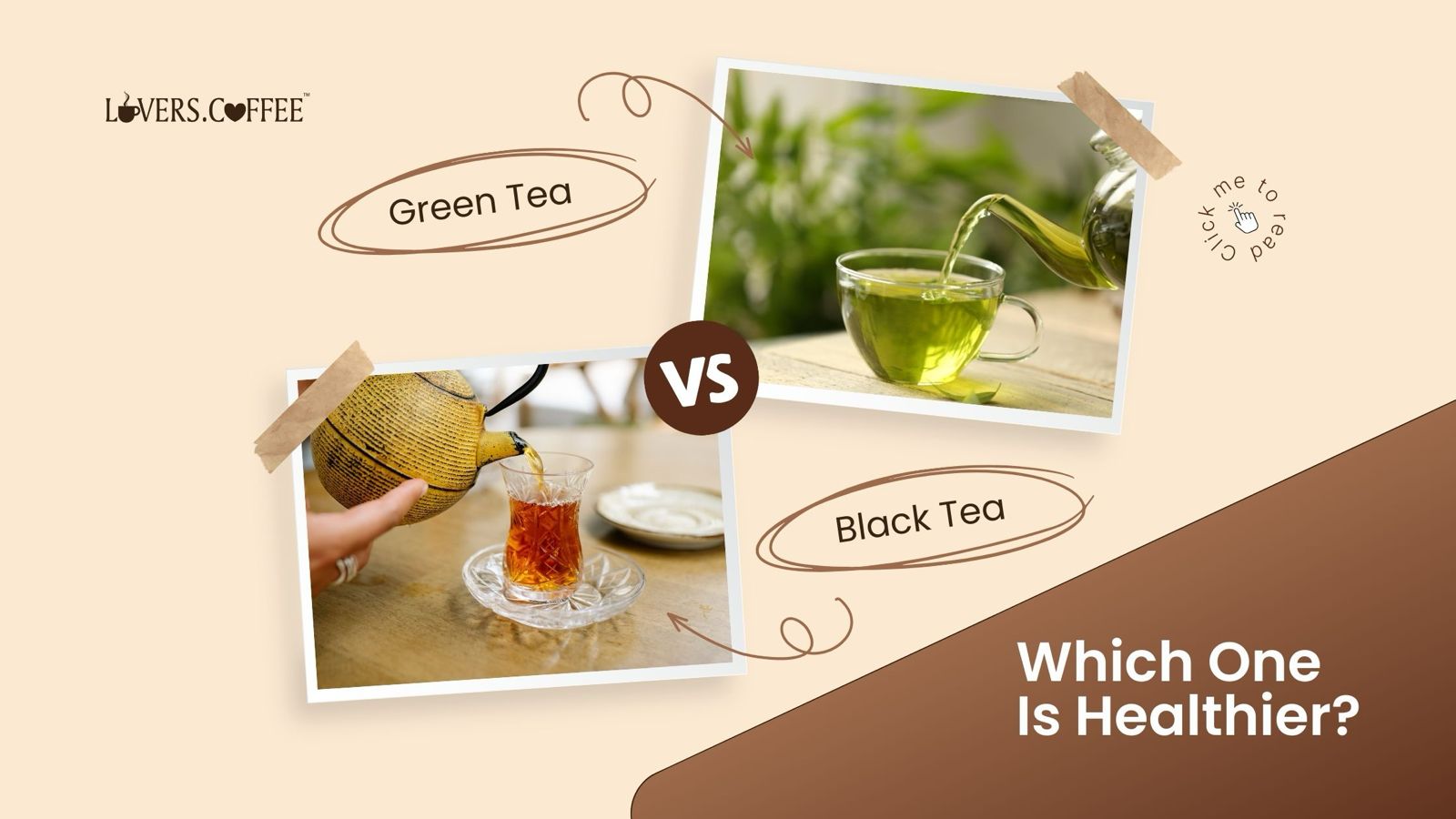
Green tea vs Black tea: Which is healthier?




Green tea vs Black tea: Which is healthier?
- azeem memon
- 02-17-2026
- 02-17-2026
- 434 views
- Information
In the ongoing debate of green tea vs black tea, consumers aren’t just choosing a flavor profile; they’re effectively selecting different phytochemical compositions, caffeine delivery rates, and oxidation levels of the same plant (Camellia sinensis). Globally, tea is the second most consumed beverage after water, with the International Tea Committee estimating annual consumption at over 6.7 million metric tons. However, geographic preference varies significantly: black tea dominates in South Asia, the UK, and the Middle East, while green tea leads in East Asia, particularly China, Japan, and Korea. This distribution isn’t a cultural coincidence; it reflects climate adaptation, processing traditions, and perceived health outcomes.
From a nutritional epidemiology standpoint, both teas are associated with reduced cardiometabolic risk markers, but via different polyphenol pathways. Green tea is rich in catechins (especially EGCG), while black tea contains theaflavins and thearubigins formed during oxidation. In practical terms, the green tea vs black tea comparison becomes less about “which is universally healthier” and more about biochemical targeting: antioxidant density, gut microbiome modulation, cognitive stimulation, and long-term metabolic effects. The following analysis breaks down their processing, composition, physiological impact, and suitability by lifestyle and regional consumption patterns.
Processing & Chemical Composition
The primary difference in green tea vs black tea begins at oxidation. After harvesting, green tea leaves are rapidly heated to stop enzymatic activity, preserving natural catechins. Black tea, on the other hand, is intentionally oxidized, transforming catechins into theaflavins and thearubigins. This single processing step fundamentally alters flavor, color, and physiological effects.
Key Points
- Same plant (Camellia sinensis), different processing
- Oxidation determines antioxidant type
- Flavor and color are biochemical results, not additives
- Influences caffeine absorption behavior
| Feature | Green Tea | Black Tea |
|---|---|---|
| Oxidation | None | Full |
| Main Polyphenols | Catechins (EGCG) | Theaflavins & Thearubigins |
| Flavor | Fresh, grassy | Bold, malty |
| Color | Light green/yellow | Amber/dark brown |
| Absorption speed | Faster | Slower sustained |
Nutritional & Bioactive Compounds
In the green tea vs black tea nutrient comparison, green tea delivers more direct cellular antioxidants, while black tea provides compounds beneficial to circulation and digestion. Both contain L-theanine and caffeine, but their ratios create very different physiological responses.
Key Points
- Green tea = higher antioxidant density
- Black tea = stronger gut and vascular activity
- Both provide mental alertness differently
- Caffeine strength varies by oxidation level
| Compound | Green Tea | Black Tea |
|---|---|---|
| EGCG | Very High | Low |
| Theaflavins | Minimal | High |
| L-Theanine | Moderate | Moderate |
| Caffeine | 25–40 mg | 40–70 mg |
| Fluoride | Lower | Higher |
Health Benefits
When evaluating green tea vs black tea health benefits, green tea works more at the metabolic and anti-inflammatory level, whereas black tea contributes more toward cardiovascular and digestive function.
Key Points
- Green tea supports metabolism and cellular repair
- Black tea supports heart and gut health
- Both reduce oxidative stress differently
- Effects depend on daily routine and diet
| Benefit Area | Green Tea | Black Tea |
|---|---|---|
| Weight metabolism | Strong | Moderate |
| Heart health | Moderate | Strong |
| Anti-inflammatory | Strong | Moderate |
| Gut health | Mild | Strong |
| Long-term aging support | Higher | Moderate |
Energy & Cognitive Effects
The stimulant profile differs significantly in green tea vs black tea due to caffeine binding behavior with tannins and L-theanine. Green tea provides calmer concentration, while black tea produces stronger alertness.
Key Points
- Green tea = steady focus
- Black tea = stronger wake-up effect
- Jitter risk higher with black tea
- L-theanine balances green tea stimulation
| Factor | Green Tea | Black Tea |
|---|---|---|
| Alertness | Smooth | Strong |
| Crash | Rare | Possible |
| Anxiety risk | Low | Higher |
| Best time | Afternoon/evening | Morning |
Weight Management & Blood Sugar
From a metabolic standpoint in green tea vs black tea, green tea enhances fat oxidation while black tea helps regulate post-meal glucose spikes.
Key Points
- Green tea increases calorie burning
- Black tea stabilizes sugar absorption
- Useful for different diet strategies
- Works best when unsweetened
| Goal | Green Tea | Black Tea |
|---|---|---|
| Fat burning | High | Low |
| Appetite control | Moderate | Moderate |
| Blood sugar control | Moderate | Strong |
| Post-meal digestion | Mild | Strong |
Conclusion
The green tea vs black tea discussion ultimately comes down to functional intent rather than superiority. Both originate from the same leaf yet diverge into distinct physiological roles because oxidation reshapes their polyphenol profile. Green tea prioritizes cellular-level antioxidant activity, metabolic stimulation, and steady cognitive focus. Black tea emphasizes systemic support of cardiovascular function, digestive efficiency, and stronger immediate alertness.
If you want more coffee information, recipes, and seasonal coffee trends, make sure to check our blog daily and explore the Lovers.coffee marketplace for everything you need to make your holiday moments even sweeter.




Deal of Day

Shop

Visit Our Store!
Discover products inspired by our blog — click here to explore the store.
Visit NowEvents

Events-Coffee Culture Live
Don’t miss out on exclusive coffee events and community gatherings.
Coming Soon
Jobs


Subscribe now
Subscribe to our newsletter today for a chance to win a FREE one year coffee subscription after your first order!